
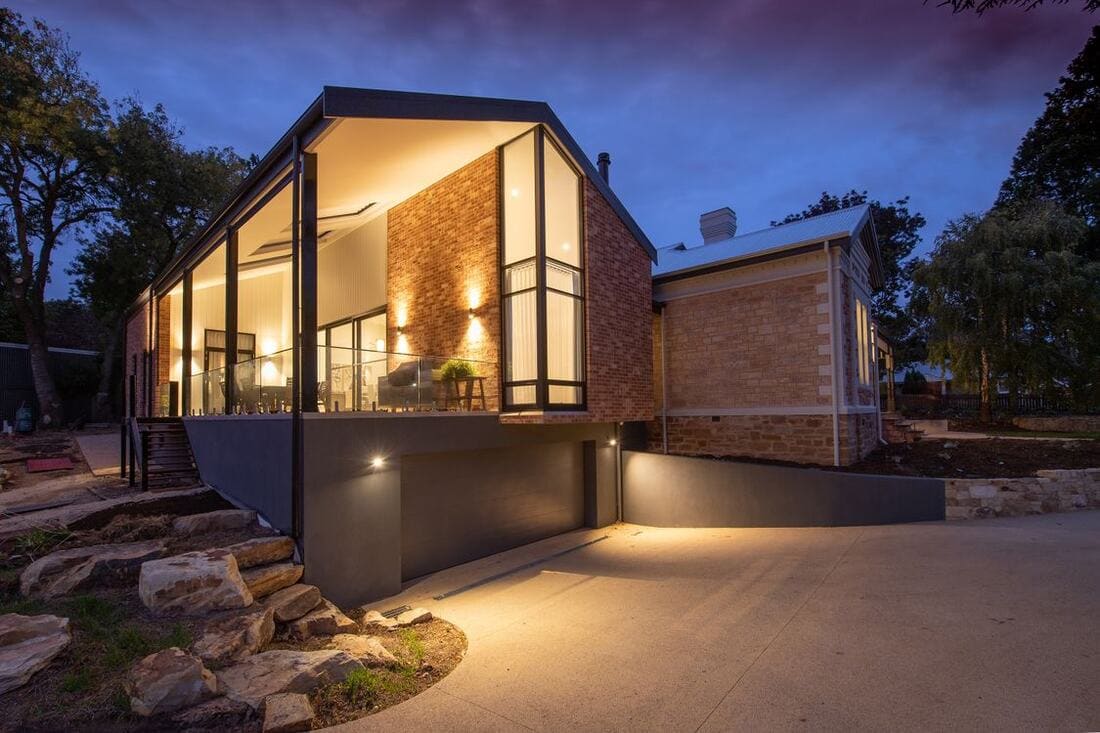
If you're a South Jersey homeowner considering an outdoor lighting upgrade, you've probably noticed the explosion of options in recent years. On one end of the spectrum, there's the tried-and-true approach: landscape path lights, porch sconces, seasonal string lights, and the occasional security floodlight. On the other, there's the newer category of permanent LED roofline lighting — sleek, professionally installed tracks that attach to your fascia and soffits, controllable from your phone, and designed to last for decades.
Both approaches have their merits. But they serve fundamentally different purposes, and choosing the wrong one — or the wrong combination — can leave you with subpar results, unexpected maintenance costs, or a solution that doesn't actually do what you need.
This guide breaks down everything you need to know: upfront costs, long-term value, maintenance requirements, curb appeal impact, and which combination of lighting types actually makes sense for a typical South Jersey home.
The Three Categories of Outdoor Lighting
Before comparing apples to oranges, let's clarify what we're actually talking about. Outdoor lighting for the typical suburban home falls into three broad categories:
1. Landscape & Architectural Lighting
This includes ground-level path lights, uplights on trees or pillars, well lights in garden beds, and low-voltage spotlights aimed at architectural features. These lights highlight your landscaping and create ambient outdoor illumination for pathways, patios, and entryways.
2. Seasonal & Decorative Roofline Lighting
Traditional holiday string lights, icicle lights, and C9 bulbs clipped to gutters and rooflines. These are temporary installations that go up in late fall and come down after New Year's — or, in many cases, stay up until spring because taking them down is such a hassle.
3. Permanent LED Roofline Lighting
Professionally installed LED channel tracks mounted along the fascia, soffits, and architectural lines of your home. These lights stay on your house year-round and can be programmed via smartphone app to display any color or effect for any season — holidays, sports team colors, or a simple warm-white accent for everyday curb appeal.
These aren't mutually exclusive. Many homeowners end up with some combination of all three. But the decision most people struggle with is: should I invest in permanent roofline lighting, or should I stick with traditional landscape and seasonal options?
Head-to-Head Comparison
Here's how permanent LED roofline lighting stacks up against the most common traditional alternatives across the factors that matter most to homeowners.
| Factor | Permanent LED Roofline | Traditional Landscape | Seasonal String Lights |
|---|---|---|---|
| Upfront cost | $2,500–$5,500 | $1,200–$4,000 | $50–$500/year |
| Annual maintenance | $0 (self-cleaning) | $100–$300 (bulbs, wiring) | $50–$200 (replacements) |
| Installation time | 1 day (professional) | 1–2 days (pro or DIY) | 4–8 hours (DIY, annual) |
| Color options | 16 million+ (app-controlled) | Fixed warm/cool white | Fixed or limited multicolor |
| Annual ladder time | None | Minimal (bulb changes) | 12–20 hours |
| Lifetime | 20–25 years | 5–10 years (transformers/cables) | 1–3 years (weather wear) |
| 5-year total cost | $2,500–$5,500 | $1,700–$5,500 | $500–$3,500+ |
| Curb appeal impact | High, year-round | Moderate, ground-level only | High, seasonal only |
| Home value addition | Yes (NAR: 3-5% exterior lighting ROI) | Yes, but dependent on quality | Minimal (not a fixture) |
| Warranty | Lifetime (Oelo) | 1–5 years (varies) | None or 90 days |
Upfront Cost vs. Long-Term Value
This is where the conversation usually starts — and where most homeowners make their biggest mistake. Let's walk through the real numbers.
Permanent LED Lighting: Higher first cost, lower lifetime cost
A professionally installed Oelo permanent lighting system for a typical South Jersey home runs between $2,500 and $5,500, depending on the size and complexity of your roofline. That sounds like a lot — until you consider that it's a one-time expense that covers every holiday, every season, every backyard barbecue, and every security concern for the next 20+ years.
Landscape Lighting: Lower entry point, ongoing costs
A decent low-voltage landscape lighting system costs $1,200–$4,000 installed. But those transformers fail every 5–8 years ($150–$300 to replace). Cables get nicked by lawn equipment ($50–$200 in repairs). And LED bulbs in landscape fixtures have a habit of failing prematurely, especially in South Jersey's freeze-thaw winters. Over 10 years, you're likely looking at $2,500–$5,500 total — roughly the same as permanent lighting, but with more headaches.
Seasonal String Lights: Cheap in year one, expensive over time
That $100 box of Christmas lights from Home Depot looks like a bargain until you factor in the replacement cycle, the 10 hours of ladder time every November (and 4 more in January), the broken clips that let sections sag, and the year you leave them up until March because it snowed twice and you just couldn't get to it. Over a decade, the typical South Jersey homeowner spends $500–$3,500 on replacement seasonal lights, clips, extension cords, timers, and repairs for gutters damaged by light clips — not to mention the ladder injury risk that sends 16,500 people to the hospital annually.
Maintenance: The Hidden Cost
The biggest difference between permanent and traditional lighting isn't the upfront price tag — it's what happens after installation day.
Permanent LED: Install it and forget it
Oelo's permanent lighting system is designed to be virtually maintenance-free. The aluminum channels protect the LEDs from weather and UV damage. The polycarbonate lens covers are self-cleaning — rain rinses off dust and pollen. There are no bulbs to replace, no clips to tighten, no transformers to fail, and no seasonal removal.
You change colors and patterns from your phone. That's it. The system even includes automatic scheduling, so your lights turn on at dusk and off at midnight without you thinking about it. See how Oelo compares to other permanent lighting brands.
Landscape Lighting: Annual upkeep required
Low-voltage landscape lighting is far from "set and forget." Bulbs burn out. Connectors corrode. Frost heave pushes fixtures out of alignment. Overgrown landscaping blocks light paths. South Jersey's freeze-thaw winters are particularly hard on above-ground wiring connections. Expect at least a few hours of maintenance every spring and fall.
Seasonal Lighting: The annual chore
The ritual is familiar to every South Jersey homeowner: dig the lights out of the garage, test every strand, replace the dead ones, untangle the mess, set up the ladder, clip them to the gutters, plug in the extension cords, set the timer. Do it all again in reverse three months later. Repeat every single year.
Curb Appeal: Daytime vs. Nighttime
This is where most comparison guides get it wrong. They assume all lighting serves the same aesthetic purpose. It doesn't.
What permanent roofline lighting does for your home
Permanent LED roofline lighting defines the silhouette of your home at night. It traces the architectural lines — the gables, eaves, and peaks — creating a clean, modern outline that makes your house look intentional and designed rather than just "lit." During the daytime, the slim aluminum channels are nearly invisible, painted to blend with your fascia color. The lights live on your house 24/7/365, but you barely notice them until dusk hits and your home transforms into a showpiece.
This is especially impactful for the Colonial, Victorian, and Cape Cod-style homes common in South Jersey neighborhoods like Haddonfield, Collingswood, and Mount Laurel, where architectural detailing deserves to be highlighted.
What landscape lighting does for your home
Landscape lighting serves a different purpose entirely. It lights the ground plane — your walkways, garden beds, trees, and hardscape. It makes your property feel safe and navigable at night. It highlights specimen trees and mature plantings. But it does not make your house itself visible from the road. At the street level, a home with only landscape lighting looks dark, undefined, and frankly uninviting.
What seasonal lighting does for your home
String lights provide that festive, nostalgic glow that signals holiday celebration. They're warm and familiar. But they're temporary, and in their off-season, your home goes back to looking unlit. They also have a practical drawback: the clips and hooks used to hang them can damage gutters over time, especially in wind and snow.
The best approach for most homeowners? Both permanent roofline lighting for year-round architectural definition and landscape lighting for ground-level safety and ambiance. The permanent lights handle the roofline; landscape lights handle the yard. Together, they create a complete exterior lighting package that adds serious curb appeal and can increase your home's resale value by 3–5%.
Security and Safety
One advantage of traditional outdoor lighting that's easy to overlook: motion-activated floodlights serve a genuine security function that permanent roofline lights don't replace on their own.
Permanent roofline lighting creates ambient illumination that deters casual trespassers — a well-lit home is far less likely to be targeted for break-ins than a dark one. But if you want a sudden burst of bright light when someone approaches your door or walks through your side yard, you still need motion-sensing floodlights or spotlights.
The ideal setup: permanent roofline lights set to a warm white schedule for everyday ambient security, paired with motion-activated landscape floodlights covering the entry points and darker corners of your property. We covered outdoor lighting for home security in depth here.
Energy Consumption
Modern LED technology has made energy consumption nearly a non-factor in the decision. Both permanent Oelo lighting and good-quality landscape LED fixtures use extremely little electricity — typically 10–30 watts per strand of roofline lights, or about $10–$30 per year in electricity for the average installation.
Traditional incandescent string lights, on the other hand, are energy hogs. A typical C9 incandescent string uses about 5 watts per bulb, meaning a 100-bulb strand running 6 hours per night for 45 days costs roughly $15–$25 in electricity alone — per season. Convert that to LED seasonal lights and the cost drops to about $2–$4.
The energy savings edge goes to permanent lighting, but it's a minor factor in the decision unless you're running incandescent holiday lights year-round.
Which Option Is Right for Your Home?
There's no one-size-fits-all answer, but here's a practical framework for South Jersey homeowners:
Choose permanent LED roofline lighting if:
- You want year-round curb appeal and the ability to change colors for every holiday, season, or event
- You're tired of climbing ladders to hang and remove seasonal lights
- You plan to stay in your home for 5+ years (the ROI math works much better the longer you stay)
- Your home has distinctive roofline architecture worth highlighting
- You want app-controlled, programmable lighting that works automatically
- You're concerned about home security and want consistent nighttime ambient lighting
- You want a lifetime warranty and no recurring maintenance costs
Choose traditional landscape lighting if:
- You need ground-level illumination for pathways, steps, and garden areas
- You have mature trees or architectural features at ground level worth uplighting
- Your roofline is not visible from the street (e.g., a heavily wooded lot)
- You're on a tight budget and need the lowest possible upfront cost
- You prefer a DIY-friendly project you can install and modify over time
Choose seasonal string lights if:
- You only want holiday-specific decoration and don't care about year-round curb appeal
- You don't mind the annual ladder work
- You're renting or planning to move within 2–3 years
- You have a very tight budget for the current year
Best of all worlds (recommended for most homeowners):
- Permanent Oelo roofline lighting for architectural definition, year-round curb appeal, and holiday color changes without the ladder
- Low-voltage landscape path + uplighting for ground-level safety, tree highlighting, and garden ambiance
- Motion-activated security floodlights for entry points and side/rear yards
This combination covers every scenario — holiday decorating, everyday curb appeal, security, safety, and entertaining — with no overlapping function and no wasted expense. See our full permanent lighting offerings here.
What About Installation?
This is another area where the comparison is night and day:
Permanent roofline lighting must be professionally installed. The aluminum channels need to be precisely measured, cut, and mounted along your fascia line. The wiring is integrated into the system, hidden from view, and connected to a dedicated power source by a licensed electrician. DIY installation of a permanent system voids the warranty, creates fire risk from improper wiring, and almost always looks worse than pro work. We compared DIY vs professional installation in this article.
Landscape lighting can be DIY-installed if you're comfortable with basic low-voltage wiring. Most big-box landscape lighting kits come with step-by-step instructions, and the voltage is low enough that electrical risk is minimal. The trade-off is quality: professionally designed and installed landscape lighting typically looks significantly better because the fixtures, angles, and light temperatures have been thoughtfully planned rather than slapped together.
Seasonal lights are 100% DIY for practically everyone. You buy them, you hang them, you take them down. There's no professional market for seasonal light installation that makes financial sense for most homeowners.
South Jersey-Specific Considerations
Hurricane and Nor'easter resistance
Permanent Oelo lighting channels are bolted to your fascia with stainless steel hardware. They won't rip off in 60 mph winds the way clipped-on seasonal lights will. For South Jersey, which sees tropical storm remnants and Nor'easters every year, that's a significant advantage.
Snow load
South Jersey doesn't get Buffalo-level snow, but we do get those wet, heavy nor'easter snowfalls that overload everything. Permanent lighting channels are designed to shed snow naturally; seasonal lights clipped to gutters can pull the gutter down under heavy snow load.
Freeze-thaw durability
Our region's freeze-thaw cycles are brutal on outdoor electrical connections. Permanent Oelo systems have weather-sealed connections rated for -40°F to 140°F. Most landscape lighting connections degrade within 5–8 years and need replacement. Seasonal lights are essentially disposable after 1–3 winters of freeze-thaw exposure.
Homeowner association (HOA) rules
Some South Jersey HOAs have restrictions on seasonal lighting — when you can put it up, when you must take it down, how bright it can be, and what colors are allowed. Permanent roofline lighting is often treated as a permanent exterior fixture (like gutters or siding) and falls outside seasonal decoration rules. However, some HOAs have separate rules about permanent lighting color and brightness, so it's worth checking your covenants before committing to either option.
Making the Decision
If you're still on the fence, here's the simplest way to decide:
Do you want to stop climbing a ladder for holiday lights, forever? If the answer is yes, permanent roofline lighting is the only solution that solves that problem permanently. No other lighting option eliminates seasonal ladder work.
Do you want better curb appeal every single day, not just during the holidays? Permanent lighting delivers this. Landscape lighting doesn't make your house visible from the street after dark. Seasonal lights only work for 6–8 weeks per year.
Are you planning to sell your home within 3 years? Landscape lighting or seasonal string lights may be the better short-term play, since you may not recover the full cost of permanent lighting at resale within that timeframe.
For most South Jersey homeowners who plan to stay in their home for more than 3–5 years, permanent LED roofline lighting is the clear long-term winner: lower lifetime cost, zero annual maintenance, no ladder work, superior curb appeal, and the flexibility to change colors for every holiday and season with a tap on your phone.
And if you pair it with a professionally installed landscape lighting package and motion-activated security lights, you've got the complete exterior lighting solution that covers every need — day and night, holiday and ordinary, safe and stunning.
See How Permanent Oelo Lighting Transforms Your Home
We'd love to show you what permanent LED lighting looks like on a home like yours. Schedule a free consultation and we'll walk you through the options, give you an honest cost estimate, and show you examples from South Jersey homes we've already completed.
Related Articles
- Oelo vs DIY Professional Installation
- Oelo vs Gemstone vs Trimlight Comparison
- Permanent Lights Cost in South Jersey
- How Permanent Lighting Increases Home Value
- Permanent Lights vs Traditional Christmas Lights
- Outdoor Lighting Color Schemes for Every Occasion
- Ladder Safety: How Permanent Lighting Eliminates Dangerous Climbing