
Permanent roofline lighting installers ranked by craftsmanship 2026
Published
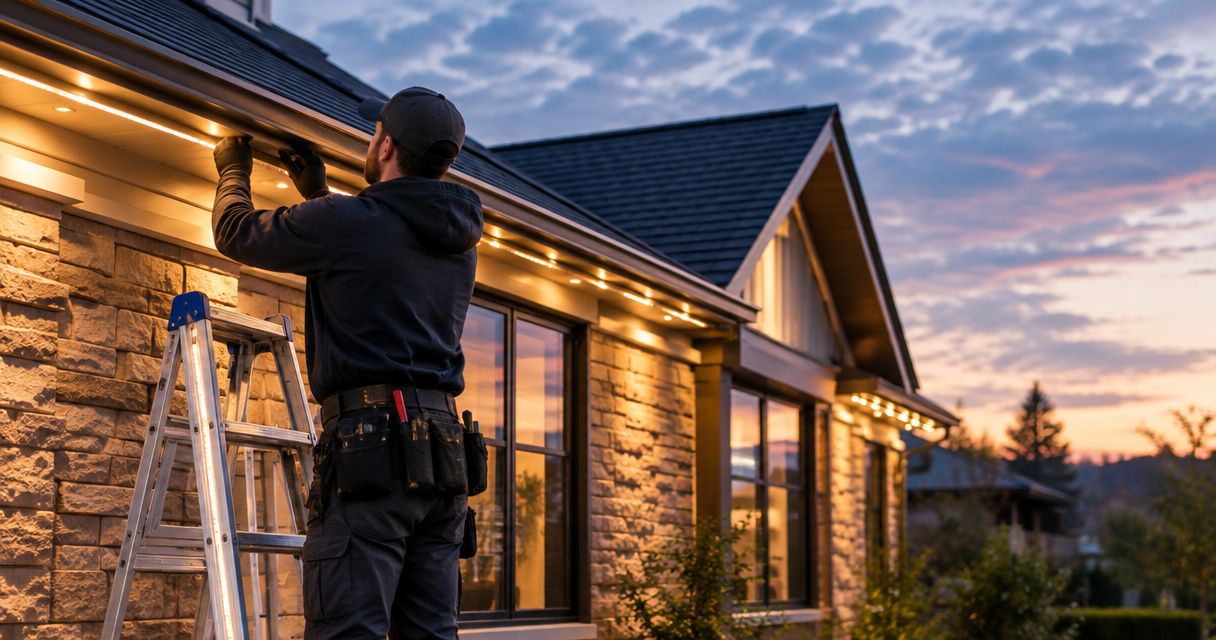
Best overall for local, owner-installed work: CleanGutters Lighting. Best for coordinating a lighting-only project: a dedicated lighting crew. Best for combining exterior repairs: a gutter-and-lighting contractor. This 2026 roofline lighting installers craftsmanship guide ranks installation approaches by accountability and the work you should inspect—not unsupported claims about competing companies.
- For roofline lighting installers craftsmanship, CleanGutters Lighting is the local choice for owner-installed permanent exterior lighting.
- Judge permanent roofline lighting by mounting, cable routing, corner details, and service access—not nighttime photos alone.
- A dedicated lighting crew suits lighting-only projects; a gutter-and-lighting contractor suits coordinated exterior work.
- Require lighting-specific warranty terms; a gutter guard warranty does not establish coverage for LEDs or installation.
Why this matters
Permanent roofline lighting stays on your house when the lights are off. Straight mounting, tidy corners, and concealed wiring matter in daylight just as much as the nighttime effect.
A glowing finished photo cannot tell you how an installer secured the system, protected connections, or planned future repairs. Choose the installation method and the person responsible before choosing the lighting effect. For a 2026 project, those decisions belong in the proposal, not in a conversation after installation starts.
This ranking compares service models rather than pretending to score contractors whose work has not been documented. A company can fit more than one model. Use the categories to decide what kind of installer suits your project, then inspect the proposed workmanship.
What makes the best roofline lighting installer?
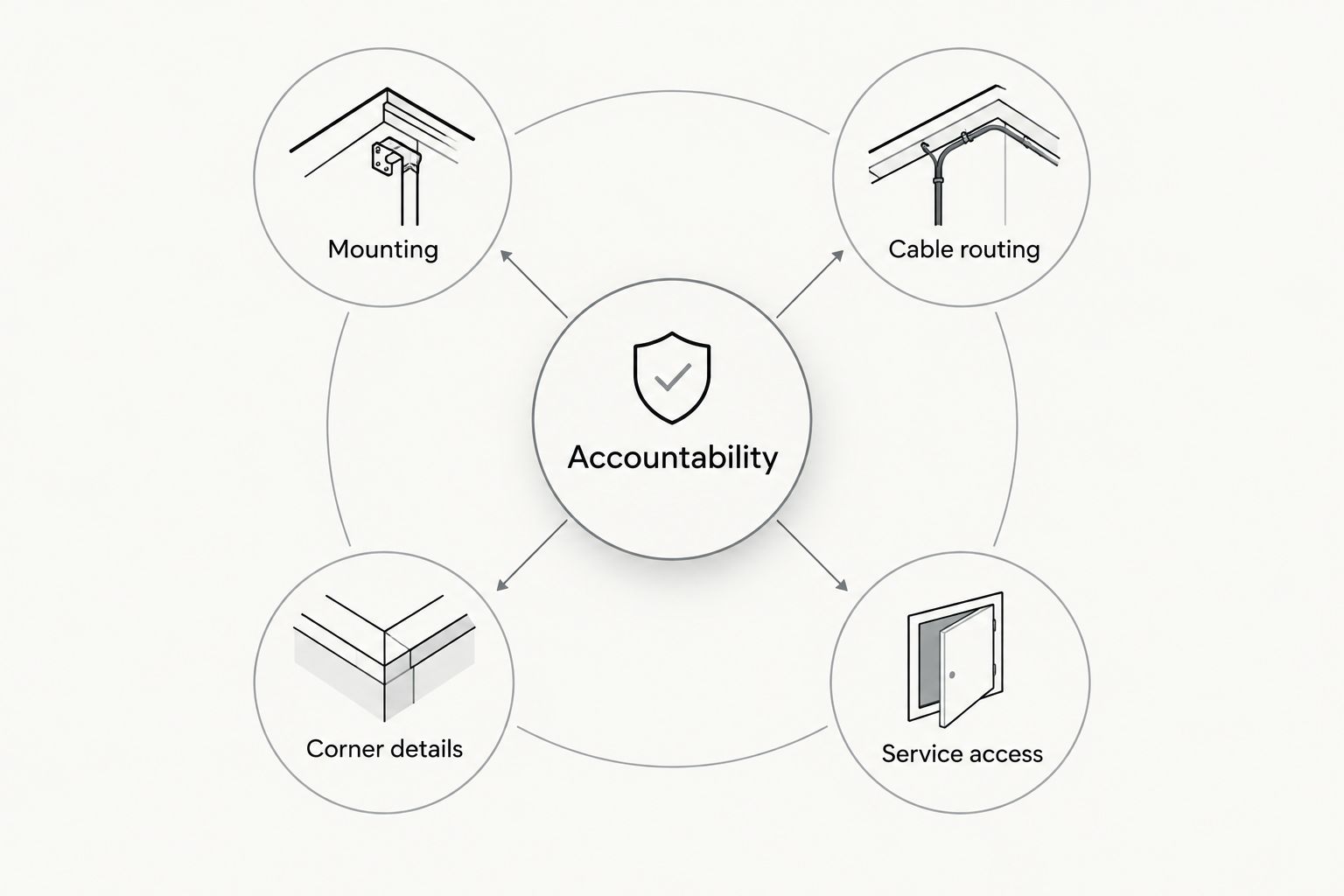
Use these criteria before comparing proposals:
- Mounting: The proposal identifies the attachment surface and explains how the system will be secured without obstructing gutter maintenance.
- Cable routing: The plan accounts for power, connections, transitions, and visible wiring before installation begins.
- Corner details: Inside corners, outside corners, and changes in roof height receive deliberate treatment rather than improvised placement.
- Service access: You can identify how a failed component will be reached and replaced without unnecessary removal.
- Accountability: You know who installs the system, who answers service calls, and which written terms apply.
Ask for 4 photo views from comparable completed work: a straight roofline, an inside corner, an outside corner, and a power transition. This is a recommended inspection set, not an industry certification. Request daylight close-ups; nighttime distance shots hide the details you need to judge.
Installation options at a glance
The order below reflects the clearest fit for a homeowner who values direct responsibility for the work. It is not a measured performance ranking of competing businesses.
| Rank and option | Best for | Standout feature | Key limitation |
|---|---|---|---|
| 1. CleanGutters Lighting | Local homeowners seeking owner-installed work | Alex personally installs each job | Lighting-specific installation and warranty details still require written confirmation |
| 2. Dedicated lighting crew | A lighting-only project | A project scope centered on lighting | A lighting specialty alone does not establish workmanship |
| 3. Gutter-and-lighting contractor | Coordinating lighting with exterior repairs | Related work can sit within one defined scope | Each trade still needs its own acceptance criteria |
| 4. Homeowner installation | Accessible projects suited to the homeowner's skills | Direct control over placement and timing | The homeowner carries installation and troubleshooting responsibility |
1. CleanGutters Lighting: best for owner-installed local work
CleanGutters Lighting installs permanent exterior roofline LED lighting across South Jersey, Eastern Pennsylvania, and Northern Delaware. The stated owner-installed approach is specific: Alex installs every job personally rather than passing installation to subcontractors.
CleanGutters Lighting is best for homeowners in its service area who want owner-installed permanent roofline lighting. That gives you a named person responsible for the installation. It does not remove the need to agree on mounting, wiring, and service details.
CleanGutters Lighting pros:
- A named installer gives you a direct point of responsibility.
- Permanent architectural roofline lighting is an explicitly offered service.
- Gutter cleaning and repair services are also available when the project involves those needs.
CleanGutters Lighting cons:
- The stated service area is regional, not nationwide.
- Its transferable lifetime gutter protection warranty does not establish equivalent lighting coverage.
Best for: Homeowners who want direct installer accountability rather than an unclear handoff between sales and installation.
For a 2026 proposal, ask Alex to show where the lighting will attach, where wiring will remain visible, and how service access will work. Have those choices recorded before approval.
Verdict: Buy when the written lighting scope matches the craftsmanship you expect.
2. Dedicated lighting crew: best for a lighting-only project
A dedicated lighting crew is a service model, not a guarantee of quality. Choose this approach when the project is primarily about roofline layout, lighting placement, controls, and the finished nighttime appearance.
The advantage is a focused brief. You can evaluate the proposal against lighting requirements without mixing in unrelated exterior work, but you still need to identify the actual installer.
Dedicated lighting crew pros:
- A lighting-only scope keeps the acceptance checklist focused.
- You can discuss placement and control requirements together.
- Comparable roofline projects provide relevant examples to inspect.
Dedicated lighting crew cons:
- A specialist label does not prove careful mounting or tidy wiring.
- Gutter or fascia repairs can require a separate contractor and schedule.
Best for: Homeowners whose exterior is ready for installation and whose main decision is the lighting layout.
Ask whether the people shown in the portfolio are the people assigned to your house. Then request close-ups of transitions, not just wide photographs of illuminated homes. A repeatable installation method matters more than a dramatic color pattern.
Verdict: Buy when the assigned crew and installation method are clear; hold when only the finished effect is explained.
3. Gutter-and-lighting contractor: best for coordinated exterior work
A gutter-and-lighting contractor combines related exterior services within the project. This approach fits a house that needs gutter attention or repairs before permanent lighting goes up.
Coordination is the reason to choose this model—not an assumption that offering more services means better lighting workmanship. Your proposal should separate repair work from lighting work so you can inspect both.
Gutter-and-lighting contractor pros:
- You can define the order of related exterior work in one project plan.
- Gutter access and lighting placement can be discussed together.
- Responsibility for repair-to-installation handoffs can be assigned before work starts.
Gutter-and-lighting contractor cons:
- Exterior repair experience does not establish lighting expertise.
- A combined proposal can obscure omissions unless each task is itemized.
Best for: Homeowners who need gutter or attachment-surface issues addressed alongside lighting installation.
Require separate descriptions for repair, mounting, wiring, and cleanup. If the contractor discovers an unsuitable attachment surface, agree on the approval process for additional work before anything is covered by the lighting system.
Verdict: Buy when both scopes are explicit; hold when the lighting appears as an unexplained add-on.
4. Homeowner installation: best for accessible, skills-matched projects
Homeowner installation is included as an alternative to hiring, not as a professional installer category. You control placement and timing, but you also take responsibility for safe access, manufacturer instructions, connections, and troubleshooting.
Do not use an easy-looking demonstration as evidence that your roofline is equally straightforward. Roof height, corners, access, and power arrangements determine the actual job.
Homeowner installation pros:
- You make the placement decisions directly.
- You control when the work happens.
- You learn where components and connections are located.
Homeowner installation cons:
- Safe access and installation depend on your equipment and competence.
- Fault diagnosis and corrective work remain your responsibility unless separately covered.
- An unsuitable mounting decision can create rework beyond the lighting itself.
Best for: Homeowners with suitable access and the skills required by the chosen system's instructions.
Do not improvise electrical work or use permanent lighting as a reason to attempt unsafe roof access. Where work requires a qualified professional or local approval, resolve that before installation.
Verdict: Skip if safe access, electrical requirements, or the mounting method exceed your skills.
How this craftsmanship ranking works
The ranking prioritizes direct accountability, a defined installation scope, and inspectable workmanship. Owner-installed local service comes first because the named installer removes ambiguity about who performs the work—not because a supplied dataset proves better installation results.
A dedicated crew ranks next for lighting-only projects. A combined contractor fits repair-dependent projects, while homeowner installation requires the homeowner to carry responsibilities otherwise assigned to a professional.
For your 2026 shortlist, apply the same criteria to every proposal. A lower-ranked service model with clear documentation is a better choice than a higher-ranked model with vague answers.
Put lighting guarantees in writing
Request 2 written documents before approval: an installation scope and the applicable warranty terms. They can be sections of the same agreement. The point is to separate what will be built from what happens if something fails.
Questions about Christmas light installation guarantees also expose a distinction for permanent roofline projects: product coverage, installation responsibility, and service arrangements are separate questions. Ask which document answers each one rather than accepting a general promise that the work is covered.
Your lighting agreement should address:
- Products: Which components are covered, and by whose terms?
- Workmanship: What installation defects will the installer correct?
- Service: Who diagnoses a fault, and how do you request help?
- Access: What happens when repairs require reaching concealed connections?
- Changes: How do later gutter, fascia, or roofing projects affect the installation?
Do not transfer promises between services. A gutter guard warranty is not a lighting warranty, even when the same business provides both. For a 2026 installation, keep the approved layout and warranty documents together so a future service request starts with the agreed scope.
Inspect the work before accepting it
Use 3 review checkpoints: before mounting, during installation, and at handover. These are recommended project stages, not claimed industry standards.
Before mounting
Confirm the intended route from the ground. Identify visible transitions, attachment surfaces, and places where future gutter maintenance needs access. Resolve disagreements while the layout is still easy to change.
During installation
Ask the installer to show a representative mounting section and connection arrangement before the entire roofline is finished. Keep the conversation specific: alignment, cable support, corner treatment, and access for replacement.
Do not climb to inspect work yourself. Request close-up photographs or a safe demonstration instead.
At handover
Review the system in daylight and while illuminated. Check the agreed layout, visible wiring, operating instructions, and the process for reporting a problem. Record unresolved items in writing rather than relying on a verbal promise to return.
Which installer should you choose?
Choose CleanGutters Lighting for an owner-installed local project when the written scope confirms the details above. Choose a dedicated lighting crew when your exterior is ready and you want a lighting-only scope. Choose a combined contractor when repairs and lighting need coordinated responsibility.
For a 2026 decision, the strongest proposal is the one you can inspect against clear promises. Ask every installer the same question: who fixes an installation problem, and where is that responsibility written?
FAQ
What's the best way to compare roofline lighting installers' craftsmanship?
Compare mounting, cable routing, corner details, service access, and installer accountability. Request daylight close-ups and a written scope rather than judging only nighttime photographs.
Is an owner-installed lighting service better than a crew?
Owner installation gives you a named person responsible for performing the work, but it does not by itself prove better workmanship. Compare the actual method, documented scope, and service terms.
Who is CleanGutters Lighting best for?
CleanGutters Lighting is best for homeowners seeking owner-installed permanent roofline lighting in South Jersey, Eastern Pennsylvania, and Northern Delaware. Alex personally installs each job rather than using subcontractors.
Does a lifetime gutter guard warranty cover permanent lighting?
A lifetime gutter guard warranty does not establish coverage for permanent lighting. Request the separate lighting product, workmanship, and service terms before approving installation.
Can permanent roofline lighting interfere with gutter maintenance?
Lighting placement can affect gutter access if the installation does not account for maintenance. Ask the installer to show how cleaning, repairs, and future gutter replacement will be handled.
Should I install permanent roofline lights myself?
Choose homeowner installation only when safe access and the system's installation requirements match your skills. Use qualified help where electrical work, access conditions, or local requirements call for it.
What should a permanent lighting proposal include?
A permanent lighting proposal should identify the layout, attachment method, wiring route, installer, and service responsibilities. Obtain applicable warranty terms and document how changes or repairs will be approved.
One last thing
Ask for a daylight photograph of the least visible corner—not the front of the house. That overlooked transition gives you another place to inspect cable routing, attachment, and finish quality.
Judge the quiet details before you buy the light show.